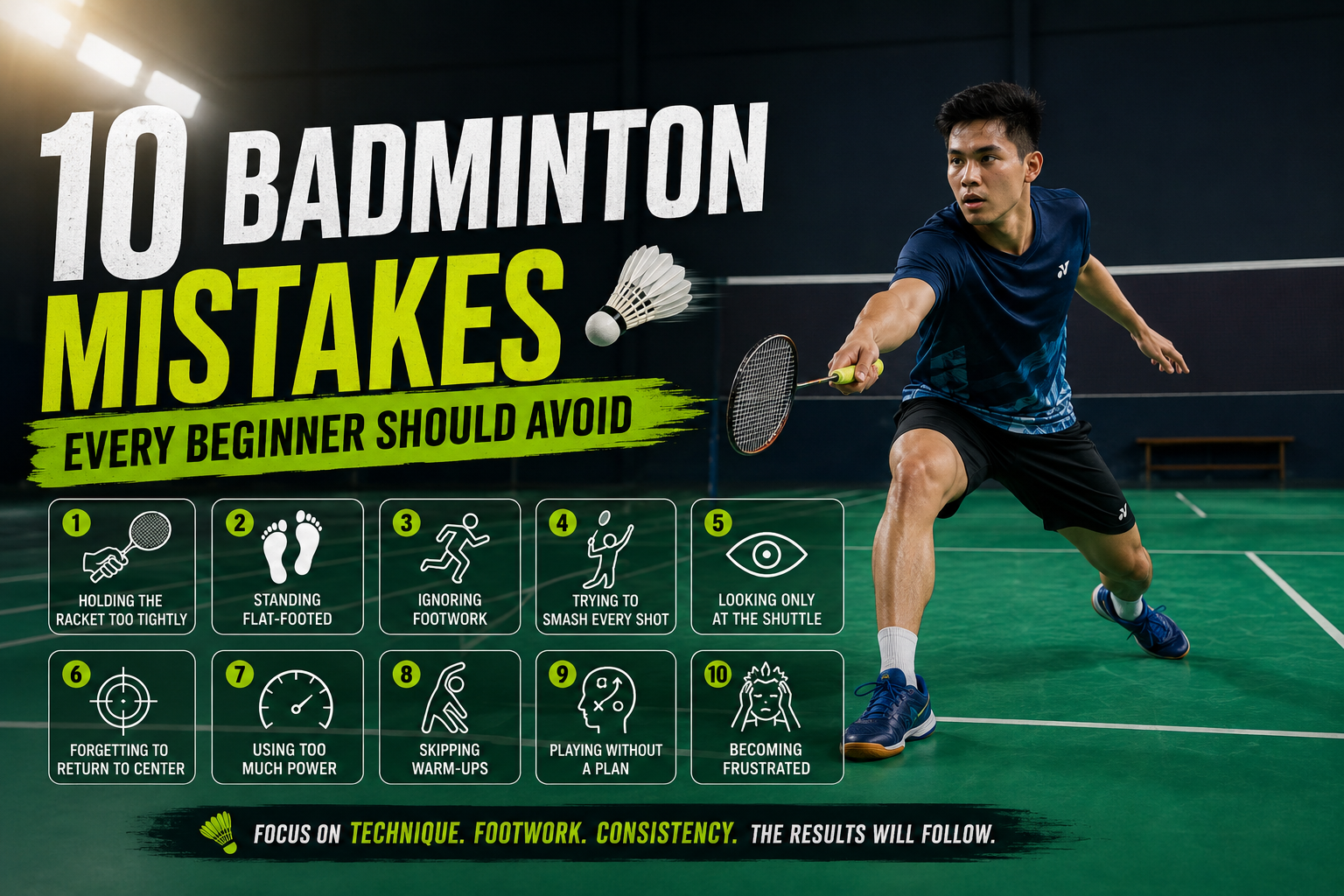
10 Badminton Mistakes Every Beginner Should Avoid
Starting badminton can be challenging. Discover the 10 most common beginner mistakes and learn practical tips to improve your footwork, technique, and overall performance on the court.
10 Badminton Mistakes Every Beginner Should Avoid
Badminton may look simple, but anyone who has stepped onto a court quickly realizes how demanding it really is. Speed, timing, footwork, and decision-making all come together in a game that rewards smart habits more than raw power.
Most beginners make similar mistakes during their first few months of playing. The good news is that these mistakes are completely normal—and once you recognize them, you can improve much faster.
Here are ten common badminton mistakes and how to fix them.
1. Holding the Racket Too Tightly
One of the biggest mistakes beginners make is gripping the racket too tightly. Many players believe a stronger grip creates more power, but the opposite is often true.
A tight grip restricts wrist movement, reduces racket speed, and causes your arm to tire much faster during long rallies.
How to Fix It
Hold the racket comfortably rather than squeezing it. Relax your fingers throughout the rally and tighten your grip only at the moment you strike the shuttle.
2. Standing Flat-Footed
Many beginners wait for the shuttle with both feet planted on the floor. This slows reaction time and makes it difficult to move quickly in any direction.
Good badminton players stay light on their feet and are always ready to react.
How to Fix It
Use a balanced ready position with your knees slightly bent. Perform a small split step just before your opponent makes contact with the shuttle to prepare for your next movement.
3. Ignoring Footwork
It's easy to focus only on learning shots, but badminton is just as much about movement as it is about hitting the shuttle.
Poor footwork often leads to late shots, weak returns, and unnecessary exhaustion.
How to Fix It
Spend time practicing movement drills, lunges, side steps, and recovery patterns. Efficient footwork allows you to reach the shuttle earlier and stay balanced throughout every rally.
4. Trying to Smash Every Shot
The smash is one of the most exciting shots in badminton, but many beginners try to use it whenever possible.
Constant smashing leads to unforced errors, wasted energy, and poor court positioning.
How to Fix It
Use a variety of shots. Clears, drops, drives, and net shots can create opportunities that make your smashes more effective when the right moment arrives.
5. Watching Only the Shuttle
Beginners often focus entirely on the shuttle and ignore what their opponent is doing.
Experienced players constantly observe their opponent's body position, racket preparation, and movement to anticipate the next shot.
How to Fix It
Keep your vision active. Watch both the shuttle and your opponent so you can react earlier and make better tactical decisions.
6. Forgetting to Recover to the Center
After hitting a shot, many beginners remain where they landed.
This creates large gaps on the court and forces them to cover too much distance during the next rally.
How to Fix It
Always recover toward your base position after every shot. Returning to the center improves your court coverage and prepares you for the next return.
7. Using Too Much Power
Many new players believe every shot should be hit as hard as possible.
However, power without control rarely wins rallies. Accuracy and consistency are far more valuable than raw strength.
How to Fix It
Focus on clean technique and proper timing. As your mechanics improve, power will naturally increase without forcing it.
8. Skipping Warm-Ups
Walking straight onto the court and starting a match can reduce performance and increase the risk of injury.
Cold muscles react more slowly and are more likely to become strained.
How to Fix It
Spend five to ten minutes warming up with light jogging, dynamic stretches, shadow footwork, and gentle rally practice before every session.
9. Playing Without a Strategy
Many beginners simply return the shuttle wherever they can without thinking about placement or tactics.
Badminton is a strategic sport where intelligent shot selection often beats powerful hitting.
How to Fix It
Aim for open spaces, move your opponent around the court, and think one or two shots ahead instead of reacting to each shot individually.
10. Becoming Frustrated Too Quickly
Every beginner misses easy shots, loses rallies, and makes mistakes.
Becoming frustrated after every error slows learning and reduces confidence.
How to Fix It
Accept mistakes as part of the learning process. Focus on improving one skill during each practice session rather than trying to master everything at once.
Final Thoughts
- Every great badminton player started as a beginner. Progress doesn't happen overnight—it comes from building strong fundamentals, practicing consistently, and learning from every match.
- Instead of chasing powerful smashes or advanced techniques too early, focus on developing good habits. Improve your grip, movement, positioning, and decision-making first. These skills form the foundation of every successful player.
- Stay patient, enjoy the journey, and remember that every practice session is another step toward becoming a better badminton player. Small improvements made consistently will always outperform shortcuts in the long run.